
Reading Time: 18 minutes
Table of Contents
📊 Did You Know? Why Every Household Needs an Emergency Fund?
Financial planners generally recommend maintaining an emergency fund equal to 3–6 months of essential living expenses. Individuals with irregular income—such as freelancers, business owners, and self-employed professionals—may benefit from saving 6–12 months of essential expenses for greater financial security.
Introduction
Life has a way of surprising us when we least expect it. A sudden medical emergency, an unexpected job loss, a major home repair, or an urgent family expense can disrupt even the most carefully planned budget.
While we can’t predict these events, we can prepare for them financially. That’s where an emergency fund comes in.
An emergency fund is more than just money sitting in a bank account. It is your financial safety net—a reserve that helps you navigate life’s uncertainties without relying on credit cards, personal loans, or dipping into long-term investments.
For many Indian households, a single unexpected expense can create significant financial stress. Building an emergency fund helps protect your financial goals, reduces anxiety during difficult times, and gives you the freedom to make thoughtful decisions instead of rushed ones.
Whether you’re a salaried employee, freelancer, entrepreneur, or retiree, an emergency fund is one of the most important foundations of a healthy financial plan.
“Hope for the best, but prepare for the unexpected. An emergency fund isn’t about expecting bad things to happen—it’s about ensuring that one unexpected event doesn’t derail your financial future.”
What Is an Emergency Fund, and Why Does It Matter?
An emergency fund is a dedicated pool of money set aside exclusively for genuine financial emergencies or temporary loss of income.
Its primary purpose is simple:
- Provide immediate access to cash.
- Protect your long-term financial goals.
- Reduce dependence on high-interest debt during emergencies.
Unlike investments such as stocks or mutual funds that are designed to grow your wealth over time, an emergency fund prioritises liquidity, accessibility, and stability over high returns.
Expenses That Qualify as Genuine Emergencies
An emergency fund should only be used for situations that are unexpected, necessary, and urgent, such as the following:
- Unexpected hospitalisation or medical expenses
- Temporary unemployment or loss of income
- Essential home repairs (such as plumbing, electrical, or structural damage)
- Emergency vehicle repairs
- Urgent travel due to a family emergency
- Critical household expenses during financial hardship
Expenses That Are Not Emergencies
It’s equally important to know what an emergency fund should not be used for.
Avoid using it for:
- Vacations or holidays
- Festivals and celebrations
- Smartphones or electronic gadgets
- Shopping sprees
- Planned home renovations
- Luxury purchases
Remember, an emergency fund is designed to protect you from financial shocks—not to finance lifestyle upgrades.
How Much Emergency Fund Do You Really Need?
One of the most common questions in personal finance is:
“How much should I save?”
A commonly recommended guideline is to maintain three to six months’ worth of essential living expenses.
However, there is no one-size-fits-all answer.
The right amount depends on your income stability, financial responsibilities, insurance coverage, and lifestyle.
Let’s look at the key factors that determine the ideal size of your emergency fund.
1. Calculate Your Essential Monthly Expenses
Start by calculating the minimum amount you need each month to maintain your household.
Include only essential expenses, such as:
- House rent or home loan EMI
- Groceries and basic household supplies
- Electricity, water, gas, internet, and mobile bills
- Insurance premiums
- Children’s education expenses
- Transportation costs
- Existing loan repayments
- Essential healthcare expenses
Exclude discretionary expenses, like:
- Dining out
- Entertainment subscriptions
- Shopping
- Vacations
- Luxury purchases
Your emergency fund should be based on the amount required for survival—not your entire monthly spending.
2. Consider Your Job Stability
Your profession plays a significant role in deciding how much emergency savings you need.
Salaried Employees
Individuals with stable employment, especially those in government or long-term corporate positions, may find that three to six months of expenses provides adequate protection.
Freelancers, Business Owners, and Self-Employed Professionals
If your income fluctuates from month to month, a larger financial cushion is advisable. In such cases, saving six to twelve months of essential expenses can provide greater peace of mind during periods of reduced income.
3. Evaluate Your Family Responsibilities
The more people who depend on your income, the stronger your financial safety net should be.
Consider building a larger emergency fund if you:
- Are the sole earning member of your family
- Have young children
- Support elderly parents
- Have significant financial obligations or caregiving responsibilities
Greater responsibility often means greater financial preparedness.
Why Insurance and Emergency Funds Go Hand in Hand
Many people think of insurance and emergency savings as two separate financial decisions. In reality, they are complementary tools that work together to protect your financial well-being.
Think of your financial safety net as having two layers:
- Insurance protects you against large, unexpected financial losses that could otherwise be devastating.
- An emergency fund helps you manage smaller, short-term financial disruptions without borrowing money or selling investments.
Neither can completely replace the other.
For example, if you’re hospitalised unexpectedly, a comprehensive health insurance policy can cover a significant portion of the medical expenses. However, you may still need money for deductibles, medicines not covered by the policy, transportation, or temporary loss of income during recovery. That’s where your emergency fund becomes invaluable.
Likewise, if you lose your job, health insurance will not pay your rent, utility bills, or groceries. Your emergency fund bridges that gap until your income resumes.
Together, insurance and emergency savings create a stronger financial foundation than either one could provide on its own.
An emergency fund and term insurance serve different purposes. While an emergency fund helps you manage temporary financial setbacks, term insurance protects your family’s long-term financial future if you pass away. Learn more in my article—the Real Purpose of Term Insurance: A Complete Beginner’s Guide.
A Simple Comparison
Consider two households with similar incomes and savings.
Household A
- Emergency savings: ₹2 lakh
- No health insurance
Household B
- Emergency savings: ₹2 lakh
- Adequate health insurance coverage
Now imagine both families face a medical emergency costing ₹3 lakh.
Household A may have to use most—or even all—of its emergency savings and could still need to borrow money.
Household B, on the other hand, may only need to pay deductibles, non-covered expenses, or incidental costs while the insurance policy covers the bulk of the hospitalisation expenses.
The difference isn’t how much they saved—it’s how well they managed financial risk.
This example highlights an important principle of personal finance: saving money is essential, but protecting it is equally important.
A Simple Emergency Fund Calculation
One of the easiest ways to estimate your emergency fund is to calculate your essential monthly expenses and multiply that figure by the number of months you want to be financially prepared for.
Example: Suppose your essential monthly expenses look like this:
| Essential Monthly Expense | Monthly Cost |
| House Rent | ₹15,000 |
| Groceries | ₹8,000 |
| Utilities | ₹3,000 |
| Insurance Premiums | ₹2,000 |
| Loan EMI | ₹7,000 |
| Total Essential Monthly Expenses | ₹35,000 |
Based on these expenses, your recommended emergency fund would be:
| Duration | Recommended Emergency Fund Amount |
| 3 Months | ₹1,05,000 |
| 6 Months | ₹2,10,000 |
| 12 Months | ₹4,20,000 |
This calculation shows why knowing your monthly expenses is the foundation of building an appropriate emergency fund. Your target should be based on your own financial situation rather than a fixed amount suggested by others.
Instead of saving an arbitrary amount, this approach gives you a realistic financial target based on your actual needs.
Remember to review your emergency fund periodically.
A salary increase, a new home loan, marriage, or the birth of a child can significantly change your monthly expenses and the amount you need to keep aside.
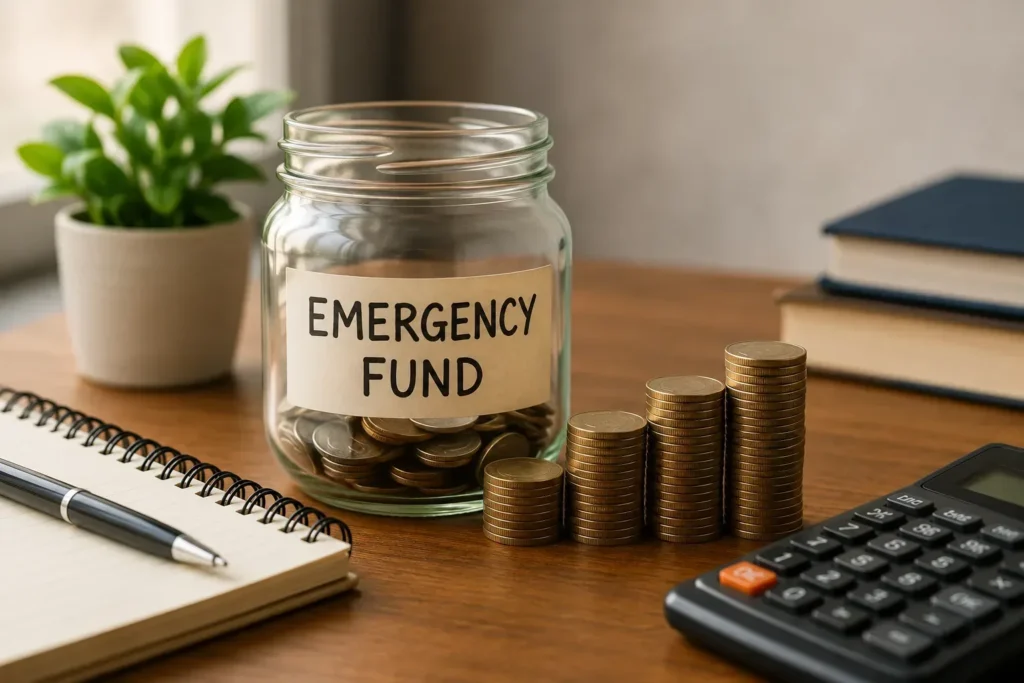
Why Building an Emergency Fund Matters More Than Ever
 Arpita’s Insight
An emergency fund is not an investment—it is your first line of financial defence.
— A principle every family should remember before they start investing.
Over the past decade, the cost of living in India has steadily increased. Expenses related to healthcare, education, housing, transportation, and daily essentials have all risen, making financial preparedness more important than ever.
An emergency fund that seemed sufficient five years ago may no longer provide adequate protection today.
Inflation gradually reduces the purchasing power of money. As your family’s lifestyle and financial responsibilities evolve, your emergency savings should evolve as well.
Financial experts generally recommend reviewing your emergency fund at least once a year or after major life events such as:
- Marriage
- Buying a house
- Having children
- Changing jobs
- Starting a business
- Taking on new loans
- Supporting elderly parents
Treat your emergency fund as a living part of your financial plan—not a one-time savings goal.
Emergency Fund vs. Investments
Many people wonder whether they should invest all their money rather than keep cash in a savings account.
The answer is simple: both serve different purposes.
Investments are designed to grow your wealth over the long term, but their value can fluctuate with market conditions. Selling investments during a market downturn to meet an emergency may force you to book losses and derail your long-term financial goals.
An emergency fund helps prevent that.
By keeping a dedicated reserve for unexpected expenses, you give your investments time to grow as intended while ensuring that short-term financial setbacks don’t disrupt your long-term wealth-building strategy.
Think of your emergency fund as the foundation of your financial house. Once that foundation is secure, building investments becomes much more stable and sustainable.
Where Should You Keep Your Emergency Fund?
An emergency fund should be safe, easily accessible, and liquid. While it’s natural to look for the highest possible returns, maximising returns should not be the primary objective of emergency savings.
Remember, the purpose of an emergency fund is availability—not profitability.
A practical approach is to divide your emergency fund into two tiers.
Tier 1: Immediate Access
Keep approximately one month’s essential expenses in an account that allows instant access to your money.
Suitable options include:
- Savings bank account
- Sweep-in (Auto Sweep) Savings Account
- A small amount of cash for immediate needs
These options ensure that funds are readily available when an emergency arises.
For information on banking regulations and consumer awareness, visit the Reserve Bank of India (RBI).
Tier 2: Short-Term Emergency Reserve
The remaining emergency corpus can be parked in relatively low-risk, liquid instruments that may offer slightly better returns while still allowing quick access.
Some commonly used options include:
- Liquid mutual funds
- Money market mutual funds
- Short-term fixed deposits with minimal withdrawal penalties
The objective is to strike a balance between liquidity, safety, and modest returns. Avoid locking your emergency fund into investments with long lock-in periods or high market volatility.
How to Build Your Emergency Fund
Building an emergency fund may seem overwhelming at first, especially if you’re starting from scratch. The good news is that consistency matters far more than the amount you begin with.
Here are some practical strategies to help you build your financial safety net.
1. Automate Your Savings
One of the simplest ways to save consistently is to automate the process.
Set up an automatic transfer from your salary account to a dedicated emergency fund account as soon as you receive your monthly income.
When saving becomes automatic, you’re less likely to spend the money elsewhere.
2. Start Small, but Start Today
Many people delay building an emergency fund because the final goal seems too large.
Instead of focusing on six or twelve months’ worth of expenses, break the goal into smaller milestones.
For example:
- First ₹25,000
- Then ₹50,000
- Next, one month’s expenses
- Three months’ expenses
- Finally, six months or more
Each milestone brings you closer to greater financial security and helps maintain motivation.
3. Treat Your Emergency Fund Like a Monthly Bill
Most people never forget to pay their rent, home loan EMI, or electricity bill because these are considered essential obligations.
Apply the same mindset to your emergency savings.
Pay yourself first.
By treating savings as a fixed monthly commitment rather than an optional expense, you create a lasting financial habit.
4. Review Your Insurance Coverage
Your emergency fund and insurance plan should work together.
Adequate health insurance can prevent a medical emergency from exhausting your savings. Similarly, suitable life insurance can protect your family’s finances if the primary earning member is no longer there.
Review your insurance coverage periodically to ensure it aligns with your current income, financial responsibilities, and family needs.
5. Avoid Lifestyle Inflation
As income increases, it’s tempting to upgrade your lifestyle immediately—buying a bigger car, dining out more often, or spending more on discretionary purchases.
While there’s nothing wrong with enjoying financial progress, try increasing your savings and investments before significantly increasing your lifestyle expenses.
A higher income creates an excellent opportunity to strengthen your financial safety net.
Common Mistakes to Avoid
Even financially disciplined individuals sometimes make mistakes when building an emergency fund.
Here are a few common pitfalls to watch out for:
Using the Fund for Non-Essential Expenses
An emergency fund should not finance vacations, shopping, gadgets, or festive celebrations. Reserve it strictly for genuine emergencies.
Chasing High Returns
Avoid investing emergency savings in assets that can fluctuate significantly in value or take time to liquidate.
Your emergency fund should prioritise capital preservation and liquidity, not aggressive growth.
Ignoring Inflation
As your expenses increase over time, your emergency fund should increase as well.
Review your target amount annually and adjust it to reflect changes in your income, lifestyle, and financial responsibilities.
Keeping Too Much Cash at Home
While maintaining a small amount of cash for immediate needs is sensible, storing a large emergency fund at home exposes it to risks such as theft, damage, or loss.
A secure financial institution offers significantly better protection.
The Psychological Benefits of an Emergency Fund
The greatest advantage of an emergency fund isn’t just financial—it’s emotional.
Knowing that you have a financial cushion can reduce stress and improve decision-making during uncertain times.
When you’re financially prepared:
- You are less likely to panic during unexpected situations.
- You can avoid relying on expensive debt such as credit cards or high-interest personal loans.
- You gain greater confidence when making career or business decisions.
- You can focus on long-term financial goals instead of merely surviving short-term setbacks.
- You enjoy greater peace of mind knowing that your family has a financial buffer.
Financial resilience isn’t measured only by how much money you earn. It’s also reflected in how well you’re prepared to handle life’s uncertainties.
An emergency fund provides more than financial security—it provides confidence, flexibility, and the freedom to respond thoughtfully rather than react impulsively when challenges arise.
Key Takeaways
Before you begin building your emergency fund, remember these essential principles:
- Save at least three to six months’ worth of essential living expenses. If your income is irregular or you’re self-employed, consider building a larger reserve.
- Keep your emergency fund separate from your regular savings to reduce the temptation to spend it.
- Prioritise liquidity and safety over high investment returns.
- Review your emergency fund at least once a year or whenever your financial responsibilities change.
- Combine an emergency fund with appropriate insurance coverage to create a stronger financial safety net.
- Start with small, achievable milestones—consistency is more important than perfection.
Frequently Asked Questions (FAQs)
1. Should I build an emergency fund before investing?
In most cases, yes.
Having an emergency fund helps you avoid withdrawing from long-term investments during financial emergencies. Once you’ve built a reasonable safety cushion, you can invest with greater confidence and stay focused on your long-term financial goals.
2. How long does it take to build an emergency fund?
There’s no fixed timeline.
The answer depends on your income, monthly expenses, and savings rate. Even setting aside a small amount every month can make a meaningful difference over time. The key is to remain consistent.
3. Can I use a credit card instead of an emergency fund?
A credit card may provide temporary access to funds, but it should never replace an emergency fund.
An emergency fund allows you to handle unexpected expenses without incurring unnecessary debt.
4. Should my emergency fund be invested in the stock market?
Generally, no.
Stock markets can be volatile, and you may be forced to sell your investments at an unfavourable time. Emergency savings should remain in instruments that are stable, easily accessible, and suitable for short-term needs.
5. When should I use my emergency fund?
Use it only for genuine financial emergencies, such as:
- Unexpected medical expenses
- Temporary loss of income
- Essential home or vehicle repairs
- Urgent family emergencies
- Other unavoidable and unforeseen expenses
If the expense can be planned, it usually shouldn’t come from your emergency fund.
Ready to Build Your Emergency Fund?
Start today.
Even saving ₹500 or ₹1,000 each month can gradually create a financial cushion that protects your future. The important thing is not how much you begin with—it’s that you begin.
Conclusion
Financial security isn’t about predicting every challenge life may bring—it’s about being prepared when those challenges arise.
An emergency fund provides the breathing room to handle unexpected events without disrupting your long-term financial goals. Whether it’s a sudden medical expense, temporary unemployment, or an urgent household repair, having accessible savings can reduce financial stress and help you make thoughtful decisions during difficult times.
At the same time, an emergency fund works best when paired with appropriate insurance coverage. While insurance helps protect against significant financial losses, your emergency savings provide immediate support for everyday disruptions that insurance may not cover.
Building an emergency fund is one of the first steps toward financial security. It works even better when combined with adequate life insurance protection.
Building an emergency fund doesn’t require a perfect income or a large initial investment. It begins with a simple decision to save consistently, review your progress regularly, and make financial preparedness a priority.
Start Today
Building an emergency fund doesn’t happen overnight.
Whether you begin with ₹500 or ₹5,000, taking the first step today is far more important than waiting for the perfect time.
Your future self will thank you for creating a financial safety net before life throws the unexpected your way.
After all, true financial confidence isn’t measured by how much you earn—it’s measured by how well you’re prepared for the unexpected.
Disclaimer:
This article is intended for educational and informational purposes only and should not be considered financial or investment advice. Every individual’s financial situation is different. Consider consulting a qualified financial advisor before making important financial decisions.
References and Further Reading
Readers interested in learning more about personal finance, banking, insurance, and investing may find the following organisations helpful:
- Reserve Bank of India — Information on banking, financial awareness, and consumer education.
- Insurance Regulatory and Development Authority of India — Resources on insurance products, consumer rights, and policyholder awareness.
- Association of Mutual Funds in India — Educational material on mutual funds and investing.
- Securities and Exchange Board of India — Investor education resources and guidance on capital markets.
It is an eye opening topic for each one of us. Really nice topic for every individual. That’s why Financial planning is important and also an experienced and educated financial Advisor is required for necessary Financial Planning. Thanks to writer of this eye opening topic.
Thank you so much for your thoughtful feedback! 😊 I completely agree that financial planning is an important part of building a secure financial future. Having the right knowledge and, when needed, guidance from a qualified financial professional can help individuals make more informed decisions. I’m glad you found the topic useful and eye-opening. 🙏
The article has got a super professional touch. Outlook is great 👍
Thank you so much! 😊 I’m really glad you liked the article and its presentation. Your encouraging words truly mean a lot to me. ❤️
Very nicely drafted subject and a comprehensive guide for many of us to benefit from.scenario of sudden & unplanned financial crisis. Thanksto the writer for these insight building and thought provoking initiative !!
Thank you so much, Mandira, for your thoughtful and encouraging words! I’m truly glad that you found the article useful and relevant. Financial emergencies can arise unexpectedly, and being prepared can make a significant difference during such challenging times. Your appreciation motivates me to continue creating practical and meaningful content that helps readers make more informed financial decisions.